

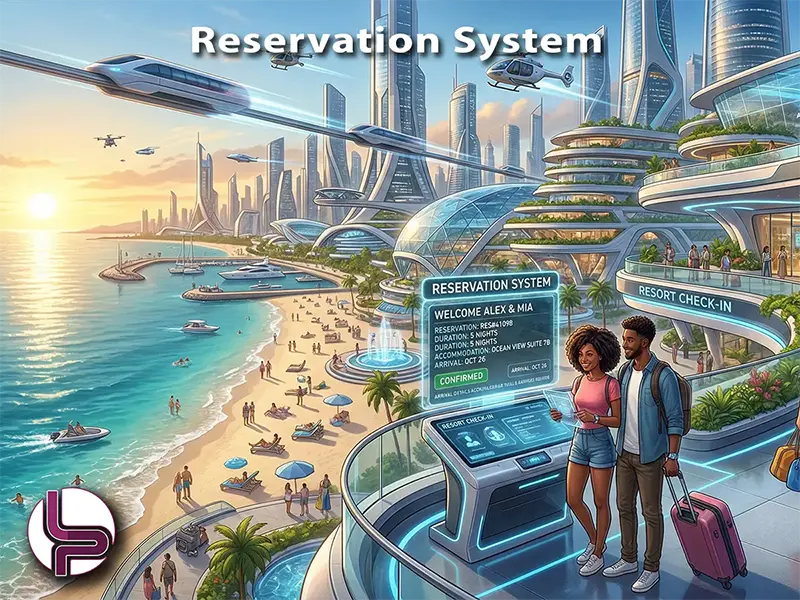
The Commission Problem
Every major reservation marketplace operates on the same model: they own the traffic, you supply the inventory, and they take a cut of every transaction. For hotels, that commission runs fifteen to twenty-five percent per booking. For restaurants using third-party ordering platforms, it can reach thirty percent. Appointment-scheduling SaaS tools meter by user seat and charge monthly whether you book one client or a hundred. In every case, the platform stands between you and your customer, accumulating the relationship data on their servers while you accumulate the fees on yours.
A self-hosted reservation system reverses the model. The booking engine lives on your domain, the availability calendar runs inside your CMS, and the payment lands in your merchant account minus only the standard card-processing fee. There is no per-booking commission, no per-seat charge, and no monthly subscription that escalates as your business grows. The customer database belongs to you. The booking history belongs to you. The ability to email a returning guest a loyalty offer next season belongs to you.
How a Self-Hosted Reservation Engine Works
The core workflow is consistent across verticals. You define inventory (rooms, tables, vehicles, service slots, rental items), set pricing rules (per night, per hour, per day, seasonal, occupancy-based), configure availability windows, and connect a payment gateway. Visitors see a calendar or search form, select dates and options, complete a booking form, and pay. The system sends confirmation emails, updates availability in real time, and logs the reservation in an admin dashboard where staff can manage, modify, or cancel bookings.
What distinguishes a serious engine from a calendar plugin is the pricing framework. Accommodation systems need rates per night per occupancy, weekend surcharges, seasonal overrides, minimum-stay restrictions, and children's-age-based charges. Car rental systems need per-day rates with insurance add-ons and pickup/drop-off logic. Appointment systems need per-service durations, employee calendars, and buffer times. A purpose-built engine handles these natively rather than forcing workarounds.
The back end matters equally. A receptionist dashboard shows today's arrivals, departures, and in-house guests. Drag-and-drop availability overviews let staff reassign rooms or time slots. Check-in workflows capture guest signatures on a digital pad and generate PDF registration documents. Cron-scheduled tasks automate pre-arrival reminders, post-departure review requests, and balance-payment notices without anyone pressing a button.
Feature Highlights
- OpenTravel-compliant pricing: per night, per occupancy, per length of stay, and per day
- Seasonal rates, weekend overrides, promotions, and coupon codes
- Min/max stay restrictions, forced arrival days, and CTA/CTD rules
- 40+ payment gateways with PayPal, offline credit card, and bank transfer pre-installed
- PMS dashboard: check-in, check-out, no-show tracking, and guest signature pad
- Drag-and-drop availability overview with room sub-unit assignment
- Automated email and SMS reminders via cron-scheduled tasks
- Invoice generation and ICS/CSV booking export
- Occupancy ranking reports, revenue stats, and authority registration exports
- Optional and mandatory extras: breakfast, cleaning fees, tourist taxes
- Children's-age pricing, single-occupancy supplements, and deposit handling
- Multi-language with built-in translation system and 140+ currency converter
- Certified channel manager for two-way sync with major online travel agencies
- Back-end manual reservations for walk-ins, phone bookings, and staff overrides
The Channel Manager: Competing Without Paying Their Fees
A certified channel manager connects your reservation engine to online travel agencies—Booking.com, Airbnb, Expedia, Google Hotel—and synchronises availability, rates, and restrictions in both directions in real time. When a guest books on your website, the room is instantly blocked on every connected OTA. When an OTA booking comes in, it appears in your admin dashboard alongside direct bookings. Overbooking is eliminated, and all reservations live in one system regardless of origin.
The strategic play is to use OTAs for discovery and your own site for conversion. A traveller finds your property on Booking.com, searches your name, and lands on your domain. If the direct-booking price is even slightly better—because you are not absorbing a twenty-per-cent commission—they book with you. Over time, your direct channel grows, your OTA dependency shrinks, and your per-booking cost drops toward zero.
Beyond Rooms: Purpose-Built Engines for Every Vertical
Accommodation is the most complex use case, but the same vendor ecosystem provides dedicated reservation engines for five additional verticals—each purpose-built rather than adapted from a generic calendar.
Car and vehicle rental uses a fleet-management engine with per-day pricing, mileage rules, insurance extras, and pickup/drop-off location calendars. A rental company runs the same direct-booking strategy against aggregator platforms.
Equipment and item rental covers anything with a unit count and a return date—bikes, tools, audio gear, camping equipment, co-working desks. The pricing framework handles daily, weekly, and hourly rates with availability tracked per individual unit.
Appointments and services map to clinics, salons, consultants, and tutors. Each employee has their own calendar, each service has a duration and price, and the front end shows available slots. Zoom integration adds virtual meetings for telehealth or remote consulting.
Restaurant reservations combine table booking with take-away and delivery order management. A restaurant replaces its third-party ordering dependency—and their thirty-per-cent cut—with a branded ordering page on its own domain.
Event ticketing handles fixed-date events with multiple ticket types, interactive seating charts, and attendance tracking—conferences, concerts, workshops, or recurring classes.
Who Uses This and How
Independent hotels and B&Bs install the accommodation engine, connect the channel manager to Booking.com and Airbnb, and begin shifting bookings to direct. The PMS dashboard replaces the reception notebook; cron jobs handle pre-arrival emails and invoice generation automatically.
Vacation-rental portfolios manage multiple properties with seasonal pricing, forced check-in days, and minimum-stay rules that vary by unit. ICS export keeps external calendars synchronised for owners who still list on niche platforms.
Service businesses—physiotherapy clinics, hair salons, driving schools—replace per-seat SaaS schedulers with a self-hosted appointment engine. Staff calendars, service durations, and payment processing all live on the business's own domain.
Car and equipment rental operators build a branded booking site that competes with aggregator listings while retaining the full margin and the customer email for repeat business.
The Trade-Off
Self-hosting a reservation system means managing payment-gateway contracts, SSL certificates, and server capacity for peak booking periods. There is no built-in marketplace audience—you drive direct traffic through SEO, email, and the OTA-to-direct funnel that the channel manager enables. Rate parity policies on some OTAs limit how aggressively you can undercut their listed price. The return is zero per-booking commissions on direct reservations, a unified customer database across all channels, and reservation infrastructure that scales at a flat license cost regardless of volume.
Extension referenced in this article:
Vik Booking by e4j (E4J s.r.l.) • extensionsforjoomla.com
OpenTravel-certified Internet Booking Engine for the CMS. Accommodation-focused: rooms, rate plans, PMS dashboard with check-in/out and signature pad, drag-and-drop availability, 40+ payment gateways, ICS/CSV export, cron-automated reminders and invoicing, occupancy and revenue reports, 140+ currency converter, and multi-language support. Booking.com Premier Connectivity Partner (certified 2018–2023). 131 reviews on the JED • €149 one-time license.
Same-vendor engines: Vik Channel Manager (€89) for OTA sync • Vik Rent Car (€129) for vehicle fleets • Vik Rent Items (€109) for equipment rental • Vik Appointments (€109) for service scheduling • Vik Restaurants (€109) for table reservations and take-away • Vik Events (€109) for ticketed events with seating charts.