

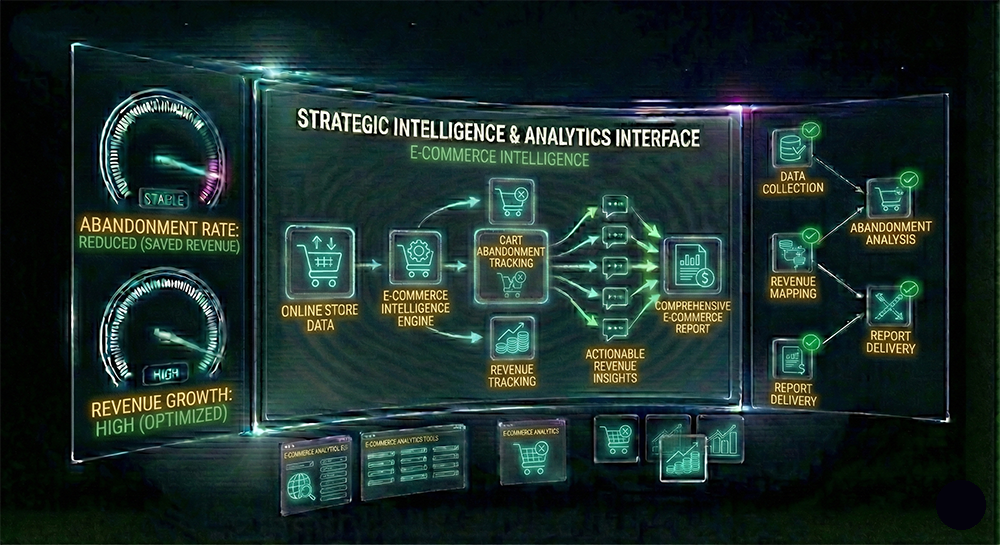
Measure the Store Journey Before Optimizing It
Pageviews alone cannot explain how shoppers move through a store. Useful commerce analysis depends on consistent events, product and transaction details, and enough context to distinguish browsing, cart activity, checkout progress, and completed purchases.
We map the measurable journey for one online store, configure or correct a standard supported analytics implementation, test the resulting data, and organize it into practical views. The result is a stronger measurement foundation for later conversion, merchandising, and marketing decisions.
Track the Purchase Journey
Event coverage is matched to the store platform, checkout architecture, and data that can be exposed reliably.
- Product discovery: Track supported product-list, product-detail, promotion, or item-selection activity with useful product context.
- Cart activity: Record appropriate add-to-cart and remove-from-cart actions, including item and value details where the platform provides them.
- Checkout and purchase: Capture supported checkout milestones and completed transactions with identifiers, value, currency, and product data needed for useful reporting.
Validate Data Before Trusting It
Configuration is only useful when events fire at the right time and the reports can be interpreted responsibly.
- Implementation checks: Test representative journeys, confirm expected parameters, and look for missing, premature, or duplicate events.
- Funnel and performance views: Organize supported product, cart, checkout, transaction, channel, and revenue data into reports that expose meaningful differences.
- Initial baseline: Summarize available historical data, current measurement gaps, test results, and practical next steps for collecting better evidence.
From Store Actions to Usable Evidence
Measurement Map
A defined set of supported commerce actions, required values, naming decisions, and reporting goals for the store.
Tested Tracking
Configuration or correction of the agreed standard integration, followed by documented checks of representative store activity.
Reporting Foundation
Usable commerce views plus an initial summary of data quality, visible patterns, limitations, and recommended follow-up.
Measurement Scope & Data Limits
The estimate covers one store and one standard supported analytics implementation, including journey mapping, agreed event configuration or correction, representative testing, basic commerce-report setup, and an initial measurement summary. Coverage depends on the store platform, checkout access, extension or tag-manager compatibility, consent behavior, test-order capability, and data exposed by the site. Tracking begins when events are implemented and cannot recreate missing history. Channel attribution is the analytics platform’s model—not proof that one touchpoint caused a sale—and meaningful funnel or product trends require enough future traffic and transactions. Custom data-layer or checkout development, server-side tracking, complex cross-domain or multi-store setups, advertising pixels and campaigns, feed management, remarketing, cart-recovery systems, store redesign, conversion optimization, ongoing analysis, and revenue improvements are separate scope.