

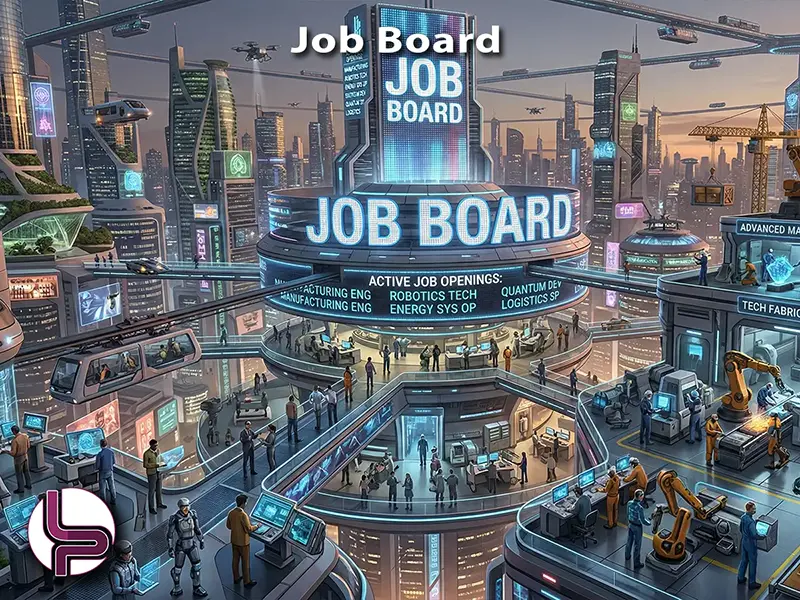
Every Listing Is a Page You Own
On a hosted job platform, a listing lives for 30 or 60 days and then vanishes—along with whatever search-engine equity it built while it was live. A self-hosted job board flips that model. Every position is a permanent, indexable page on your own domain. Over time those pages accumulate inbound links, long-tail keyword rankings, and referral traffic that compounds whether or not the role is still open. An expired listing can redirect to related openings instead of returning a dead end.
For staffing agencies, trade associations, and niche-industry publishers, a job board is also a revenue channel. Charge employers a flat fee per listing, sell subscription plans with bulk credits, or offer featured placement for a premium—all without sharing a cut with a marketplace middleman.
How the Posting Workflow Runs
Employers register, choose a subscription plan or purchase credits, and post a job through a guided frontend form. Each listing is categorised by industry, functional area, education level, job type, and location—making it immediately filterable from the jobseeker side. Admins can optionally review posts before they go live. Jobseekers build a profile, upload or build a resume on-site, and apply with a click. Job alerts notify registered candidates whenever a new listing matches their saved criteria, and a built-in cron sends those emails in managed batches so the mail server is never overwhelmed.
The same workflow scales down to a single company. Disable the multi-employer registration, and the board becomes an in-house careers page that lists every open position in one branded, searchable directory. Candidates apply through a consistent form, resumes land in a database you control, and hiring managers filter by department, location, or role type without toggling between spreadsheets and email threads. It is the same engine whether you are a staffing platform with a thousand employers or a mid-size firm filling a dozen roles a quarter.
Either way, the entire cycle runs on your existing user base. No separate identity provider, no third-party applicant-tracking lock-in, and no per-seat fees regardless of how many positions you post.
Core Job-Board Features
- Employer subscription plans with pay-per-job and credit-based posting
- Multi-dimensional job categories: industry, functional area, education, type, and location
- Jobseeker resume builder integrated into the user profile
- Automated job alerts with batched cron delivery
- Simplified frontend registration for both employers and jobseekers
- Admin review queue before listings go live
- Customizable email templates for every notification type
- Modern Bootstrap 5 responsive interface for frontend and backend
From Job Board to Freelance Marketplace
A traditional job board connects employers with full-time candidates. But the same platform can pivot into something closer to a multi-vendor services marketplace—think of it as an Etsy for skills rather than crafts. Instead of posting a permanent position, a buyer posts a project brief. Freelancers browse, bid, and compete on price, timeline, and portfolio. The site owner earns a commission on every completed transaction.
The workflow is a reverse auction: buyers describe the deliverable, set a budget range, and freelancers submit proposals. Once a bid is accepted, the payment is held in escrow until milestones are met. Milestone tracking lets both parties break large projects into verifiable stages—each with its own deliverable and release of funds. The result is a self-hosted marketplace where trust is built into the transaction flow, not bolted on after the fact.
Sellers can also list fixed-price services in a storefront-style catalog, letting buyers purchase directly without a bidding cycle. Portfolios showcase past work, verified badges signal vetted providers, and private-invite projects let buyers restrict bidding to a shortlisted group. Add NDA-protected and sealed-bid listings for sensitive engagements, and you have a platform flexible enough to serve creative agencies, consulting firms, or hyper-niche trade communities.
Payments and Revenue Control
Both the job-board and freelance models include built-in monetisation. On the careers side, employers pay through subscription plans or per-listing credits—pricing you set, with no platform commission deducted. On the marketplace side, escrow payments route through PayPal, Skrill, Authorize.Net, 2Checkout, or bank transfer. The site owner defines the commission percentage, and a profit summary dashboard with visual charts tracks revenue in real time.
Deposits, withdrawals, and escrow balances are all managed inside the platform. Freelancers see a clear ledger of funds earned, held, and available. Buyers see milestone releases and remaining project budget. The site owner sees aggregate revenue, commission earned, and transaction volume—all without a third-party payment aggregator taking an extra cut on top.
Who Uses This and How
Staffing agencies run a branded careers portal and charge employers per listing or per subscription tier. Trade associations host an industry-specific job board as a member benefit—employers get exposure to a qualified audience, and the association adds a revenue stream. Consulting firms build an internal marketplace where pre-vetted contractors bid on project briefs, with escrow and milestone tracking replacing manual invoicing. Niche communities—translators, illustrators, voice actors—launch a vertical marketplace where every seller has a portfolio page that builds domain authority over time.
The Trade-Off
A self-hosted job board or freelance marketplace requires an audience before it generates value. The software handles listings, applications, bidding, and payments, but you supply the traffic and the trust. Moderation, fraud prevention, and dispute resolution fall on your team. The upside is that every transaction stays on your platform, every candidate relationship belongs to you, and scaling from ten listings to ten thousand costs nothing extra in software fees.
Extensions referenced in this article:
JoomBri Careers by JoomBri Team • joombri.in
Job board extension for the CMS. Employer subscriptions, pay-per-job and credit-based posting, multi-dimensional job categories, resume builder, automated job alerts, and customizable email templates.
JoomBri Freelance by JoomBri Team • joombri.in
Freelance and reverse-auction marketplace for the CMS. Project posting, bidding, escrow milestone payments, portfolios, seller services, private-invite and NDA projects, multi-gateway payments, and commission-based profit tracking. 52 reviews on the JED.